
Trees and Their Benefits: Why Trees Are Essential for Life and the Environment
Discover the benefits of trees, including cleaner air, climate protection, shade, wildlife habitats, soil conservation and healthier communities.
Environment News | Luxury News
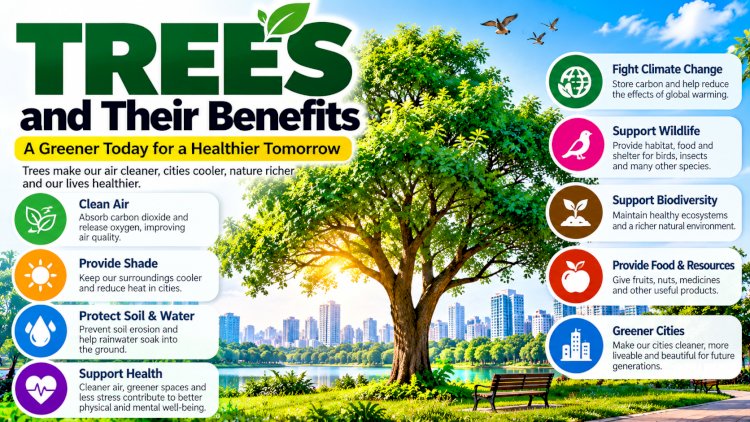
Trees are one of the most valuable natural resources on Earth. They provide oxygen, absorb carbon dioxide, support wildlife, protect soil and help maintain the balance of nature. From forests and agricultural lands to city parks and residential streets, trees play an essential role in sustaining life and improving the quality of our environment.
As urbanisation, pollution and climate change continue to affect communities around the world, protecting existing trees and planting suitable new trees have become increasingly important.
1. Trees Improve Air Quality
Trees absorb carbon dioxide during photosynthesis and release oxygen. Their leaves can also capture some airborne particles, helping improve local air quality.
In cities such as Bengaluru, trees along roads, in parks and around residential areas can contribute to healthier urban environments. However, trees are not a substitute for reducing pollution at its source.
Planting and protecting trees, alongside cleaner transport and better waste management, can help create more liveable cities.
2. Trees Help Fight Climate Change
Trees store carbon in their trunks, branches, leaves and roots. Forests and other tree-covered landscapes can therefore help remove carbon dioxide from the atmosphere and store carbon over time.
Protecting mature trees is especially valuable because established trees may already store substantial amounts of carbon. Planting new trees can provide additional long-term benefits when the species and location are suitable.
Preventing deforestation and restoring degraded landscapes are important parts of broader climate action.
3. Trees Provide Shade and Reduce Heat
Trees offer shade and can cool their surroundings through the release of water vapour from their leaves, a process known as transpiration.
In urban areas, tree canopies can reduce direct exposure to sunlight on roads, footpaths, buildings and public spaces. This can make neighbourhoods more comfortable during hot weather.
Well-planned urban greenery can be particularly useful in areas where concrete surfaces and buildings contribute to the urban heat island effect.
4. Trees Support Birds and Wildlife
Trees provide habitats, nesting places, food and shelter for birds, insects, squirrels and many other living organisms.
Different tree species support different forms of wildlife. Native trees are often especially valuable because local animals may depend on them for food and habitat.
Protecting diverse tree species helps maintain biodiversity and supports healthier ecosystems.
5. Trees Protect Soil and Water
Tree roots help hold soil together and can reduce erosion caused by wind and rain. Fallen leaves and other organic matter also contribute to soil health as they decompose.
Trees can help rainwater enter the ground, depending on soil conditions, vegetation and the surrounding landscape. Tree cover can also help regulate runoff and protect some watersheds.
These benefits are important for agricultural areas, hillsides, riverbanks and urban green spaces.
6. Trees Support Human Health and Well-Being
Parks, gardens and tree-lined streets provide places for walking, exercise, relaxation and recreation.
Access to green spaces is associated with several aspects of physical and mental well-being, although the benefits depend on factors such as accessibility, safety and the quality of the environment.
Trees can also make neighbourhoods more attractive and provide welcoming spaces for families and communities.
7. Trees Provide Food and Useful Resources
Many trees provide fruits, nuts, seeds, flowers, medicines and other useful products. Trees also support livelihoods through sustainable forestry, agroforestry, nursery businesses and related activities.
Examples include mango, neem, coconut, tamarind, jackfruit and many other species grown in India.
Responsible management is important to ensure that these resources remain available without damaging ecosystems or exhausting natural resources.
8. Importance of Trees in Cities Like Bengaluru
As Bengaluru grows, protecting urban greenery is important for maintaining environmental quality and liveability.
Trees in residential areas, parks, public institutions and along suitable roads can provide shade, support biodiversity and improve the experience of public spaces.
Urban tree management should include protecting healthy mature trees, planting suitable native species, maintaining young trees and ensuring that roots and canopies have enough space to grow.
Planting should also consider underground utilities, roads, footpaths, buildings and overhead electrical lines. The right tree in the right place is more beneficial than planting trees without a long-term maintenance plan.
9. How Can We Protect and Grow More Trees?
Individuals, communities, schools, businesses and local authorities can all contribute to protecting trees.
Here are practical steps everyone can take:
-
Plant suitable native trees where there is enough space.
-
Protect existing healthy trees from unnecessary damage.
-
Water and maintain young trees, particularly during dry periods.
-
Avoid damaging roots, bark and branches.
-
Participate in local tree-care and environmental programmes.
-
Reduce paper waste and recycle paper where appropriate.
-
Report suspected illegal tree cutting to the relevant authority.
-
Encourage schools, offices and residential communities to maintain green spaces.
Tree planting should be followed by watering, protection and maintenance. Without proper care, many newly planted trees may fail to survive.
10. Why Mature Trees Should Be Protected
Planting new trees is valuable, but it can take many years for them to provide the shade, habitat and environmental benefits of mature trees.
Healthy established trees often have extensive root systems and large canopies that support local ecosystems. Unnecessary removal can therefore result in the loss of benefits that cannot be replaced immediately by planting saplings.
Where tree removal is proposed for construction or infrastructure projects, applicable permissions and environmental requirements should be checked, and practical alternatives should be considered wherever possible.
Conclusion: Protect Trees, Protect Our Future
Trees are essential for healthier ecosystems, biodiversity, soil protection, climate action and more comfortable communities. Their benefits extend beyond the environment to human well-being, local economies and the quality of urban life.
Protecting mature trees, planting suitable species and caring for young trees are practical ways to create greener and more sustainable communities.
Every tree matters. By protecting the trees around us and planting responsibly, we can help build a healthier environment for future generations.
Stay connected with Luxury News for environment news, sustainability updates, business developments and community initiatives.