Half Helmets Banned in Karnataka: Two-Wheeler Riders Face Stricter Safety Rules
Karnataka tightens helmet safety rules as authorities target non-compliant and half helmets. Here’s what two-wheeler riders need to know about helmet requirements.
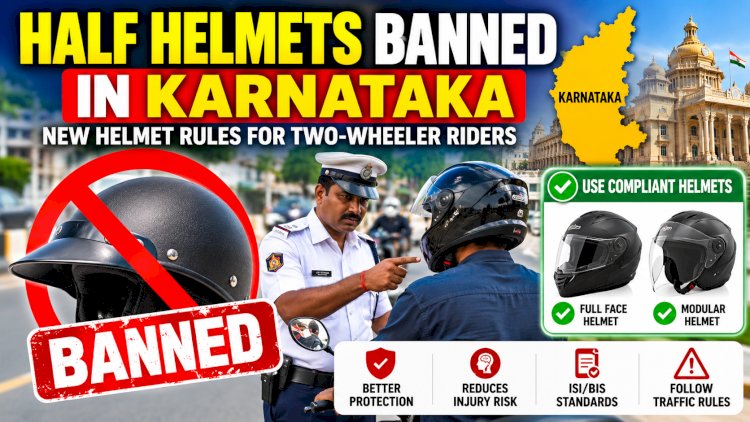
Bengaluru: Karnataka is stepping up road-safety measures for two-wheeler riders, with authorities moving against the use of half helmets and non-compliant headgear on roads. The move is aimed at improving rider safety and ensuring that helmets used by motorists meet the required safety standards.
The development is particularly significant for Bengaluru, where motorcycles and scooters are among the most widely used modes of daily transport.
Why Are Half Helmets Being Targeted?
Half helmets provide considerably less protection to the head and face compared with properly certified protective helmets designed for two-wheeler use.
Road-safety authorities have repeatedly stressed that simply wearing a helmet is not enough. Riders need to use a helmet that meets the prescribed safety requirements and fits correctly.
A compliant helmet is designed to provide better protection in the event of a crash, particularly to vulnerable areas of the head.
Two-Wheeler Riders Need to Follow Safety Rules
Motorcycle and scooter riders are expected to wear helmets that comply with applicable Indian safety standards while travelling on public roads.
Authorities may take enforcement action against riders using helmets that do not meet the required specifications. Riders should therefore check whether their helmet is properly certified before using it.
Bengaluru’s Two-Wheeler Users in Focus
The issue is particularly relevant in Bengaluru, where a large number of commuters depend on two-wheelers for travelling to workplaces, colleges and other destinations.
With increasing traffic volumes, riders face risks from collisions, sudden braking, potholes and other road hazards. Wearing appropriate protective equipment can reduce the severity of injuries in many crashes.
What Should Riders Check?
Before purchasing or using a helmet, two-wheeler owners should check:
-
Whether the helmet meets the applicable BIS/ISI safety requirements
-
Whether the helmet fits properly
-
Whether the chin strap can be securely fastened
-
Whether the helmet is damaged or excessively worn
-
Whether the helmet is designed and approved for road use
Riders should also avoid purchasing uncertified helmets simply because they are cheaper or more convenient.
Safety Over Convenience
The discussion around half helmets highlights a larger road-safety issue: protective equipment should be selected for its ability to protect riders rather than appearance or convenience.
For daily commuters, spending a little more on a properly certified helmet can provide significantly better protection in the event of an accident.
As enforcement becomes stricter, two-wheeler riders across Karnataka are advised to ensure that their helmets comply with the applicable rules and safety standards.
Luxury News | Karnataka